
The wein.plus–television program in October 2024: Our TV tips with all series and feature films, consumer shows, documentaries, travel reports, and reports about wine, winemakers, and viticulture.
ZDFneo, 7:15 AM
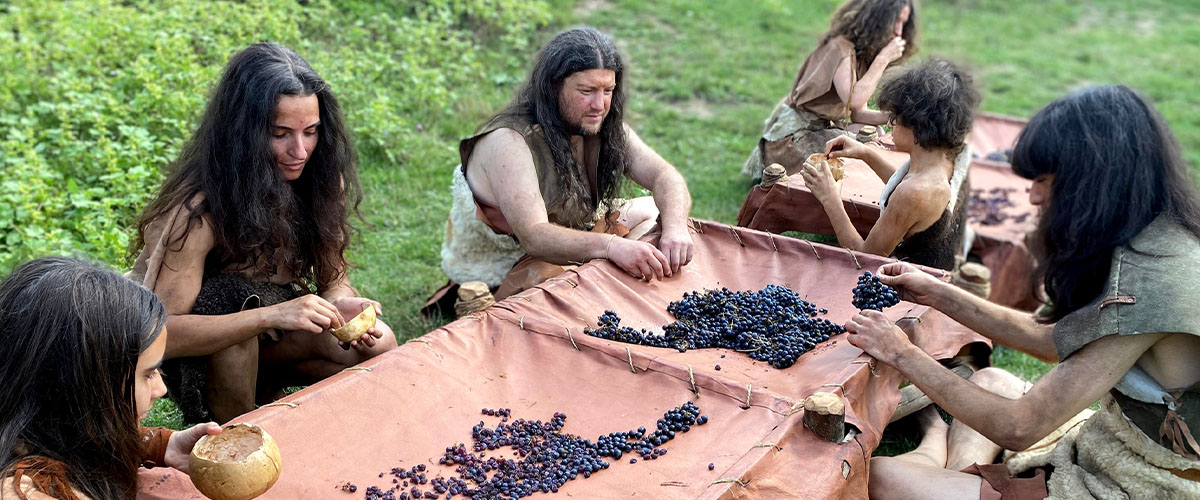
The cultivation of vines dates back many millennia. There are clear indications of where wine vines were first cultivated. The trail leads to the eastern edge of the Black Sea in present-day Georgia. From Transcaucasia, the know-how of its production spread throughout the world. Wine has accompanied humanity since the emergence of the first high cultures. It is part of many religious cults. The early globalization in the 19th century almost spelled doom for European vines. The phylloxera, an insect introduced from the USA, threatened to destroy almost the entire European stock. Only the discovery that some American vines are resistant to the pest provided salvation: To this day, all European varieties are grafted onto American vines, thus becoming immune to the phylloxera. Alongside the journey through the cultural history of wine, the film repeatedly stops at the Geisenheim University, one of the world's leading scientific viticulture institutes. Experiments and interviews with experts answer interesting questions: How does the red color get into the wine? Why are seemingly rotten grapes particularly sweet? Why could one get lead poisoning from wine consumption in earlier times? Or why is sulfur needed in wine production? Interesting facts about a beverage that is part of our cultural heritage like no other.
 |
3sat, 10:00 AM
In the southwest of Styria lies a region that is often overlooked. Both Soboth and Weinebene are pass landscapes. How do the people in this area live? The film crew visits the village of Soboth, which idyllically rests in itself. Through the protagonists, the documentary paints an authentic picture of a hidden land that the people cultivate with great love for their homeland.
WDR Television, 11:55 AM
In Rheinhessen's Aspisheim, winemaker and huntress Shanna Reis, together with friends, builds a high seat for hunting to better protect her vineyards from deer. However, the project is much more complicated than expected, and time is running out, as it is supposed to rain in the afternoon. Will they manage to set up the huge high seat with just the three of them?
SWR Television, 1:30 PM
A against all is what Henriette Richter-Röhl faces as Palatinate organic winemaker Anne in 'New Paths', the fourth film of the family saga “Winery Wader”. With the consistent renunciation of toxic pesticides, she turns her equally tradition-conscious yet stubborn neighbors against her, sparking a petty war. That her uncle Bruno, played by Jürgen Heinrich, is secretly adding fuel to the fire, the idealistic winemaker does not initially realize. Meanwhile, Leslie Malton plays a newly in love matriarch who has largely concluded her business with the winery.
SWR Television (RP), 6:15 PM
Ruppertsberg on the German Wine Route is located in the middle of Germany's largest contiguous wine-growing area. The town belongs to the district of Bad Dürkheim, and about 1,500 people live here. Thanks to the mild climate, not only does wine thrive here, but also almonds, figs, apricots, and even lemons ripen in the generous gardens.
Bavarian Television, 8:15 PM
In the Lower Franconian Rimpar, north of Würzburg, lies the winery of Franziska Schömig. The winemaker cultivates her vineyards organically. All grapes are hand-picked and spontaneously fermented. Franziska took over the winery from her father, who had run it more as a hobby. Spontaneity and improvisation are needed to respond to climate changes, says Franziska.
WDR Television, 8:15 PM
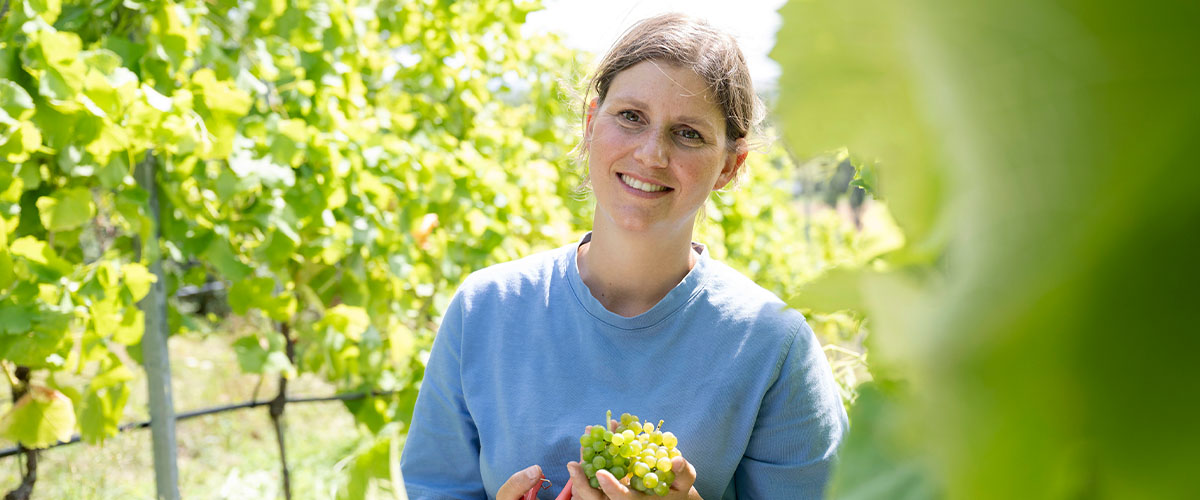
Actually, the Eifel is classic “beer country”. It is all the more surprising that wine is now being cultivated in Heimbach. Lisa and her husband Markus Schäfer took over the agriculture at the Rittergut Vlatten a few years ago, and they did so with plenty of fresh ideas. Their big dream is their own wine. For this, they have stocked a southern slope, the “Wingert” of the manor, with new vines after 100 years of dormancy. The 2024 vintage will be the eagerly awaited first harvest in the revived vineyard. Of course, wine will also be part of the “Land & Delicious” menu. As an appetizer from the kitchen, Lisa serves tapas with stuffed grape leaves. For the main course, braised beef brisket, and for dessert, vanilla ice cream with apricot tart.
 |
ARD-alpha, 9:00 PM
Patrik Mürner from Lucerne has been a mushroom fan since childhood. The trained product designer has been intensively dealing with mycelium and fruit bodies for years and has since given up his learned profession for it. One of his main research areas: the remediation of contaminated soils using mushrooms. Soon he plans to remediate a zinc-contaminated industrial wasteland near his home in this way: biologically clean, instead of packing and storing the contaminated excavated soil. At a bio-winery, Patrik Mürner also helps strengthen the grapevines with liquid mushroom mycelium. And he is working on biological packaging material made from mushrooms that a Swiss student group wants to bring to market.
3sat, 4:15 PM
Lake Constance enchants the people who live on its shores or navigate it at any time of the year. The documentary shows Lake Constance as a habitat in the tri-border area. Naturally and originally, the landscape on the Austrian side is. Gentle hills, fruit and wine cultivation characterize the German Lake Constance shore, while monasteries and castles can be found in Switzerland.
Phoenix, 7:15 PM
The Azores lie about 2,000 kilometers off the European mainland. They rise as peaks of giant underwater volcanoes from the Atlantic. The evergreen archipelago in the middle of the ocean attracts with fascinating landscapes. The vineyard areas established on the island of Pico were declared a UNESCO World Heritage Site in 2004.
arte, 6:30 AM
France, the land of wine: Hills full of vines shape the landscape in many regions. However, in some places, the cultivation methods have exhausted the vineyards. Some winemakers are therefore taking new paths – with unusual ideas and in harmony with nature. One who is fighting against the death of vineyards in France is vine breeder Lilian Bérillon. In Villeneuve-lès-Avignon, a small community in southern France, he owns a nursery. It is the crucial factor when it comes to the survival and longevity of the plants: The quality of the vine stocks he breeds also determines the quality of the grapes that will later grow on them. The wine region Beaujolais, located north of Lyon, is also going through a turbulent time. The controversial quality of Beaujolais Nouveau has led an entire region into crisis. Here, Julien Merle, a young winemaker in the fifth generation, has broken with tradition. Together with his partner Nathalie, he works in a rural manner: ecologically, without chemicals. The result is young natural wines that are trending not only in France but worldwide.
arte, 12:40 PM
With hundreds of hectares of vineyards in the city, Vienna, once the capital of the Danube Monarchy, is the largest wine metropolis in the world. For centuries, the Viennese have enthusiastically cultivated the hills along the Danube. Their deep love for their vineyards is not only due to the wealth they have brought them – as a counterbalance to the polished city center with its monumental buildings, the vineyards and their heurigen have developed into true places of longing.
MDR Television, 1:25 PM
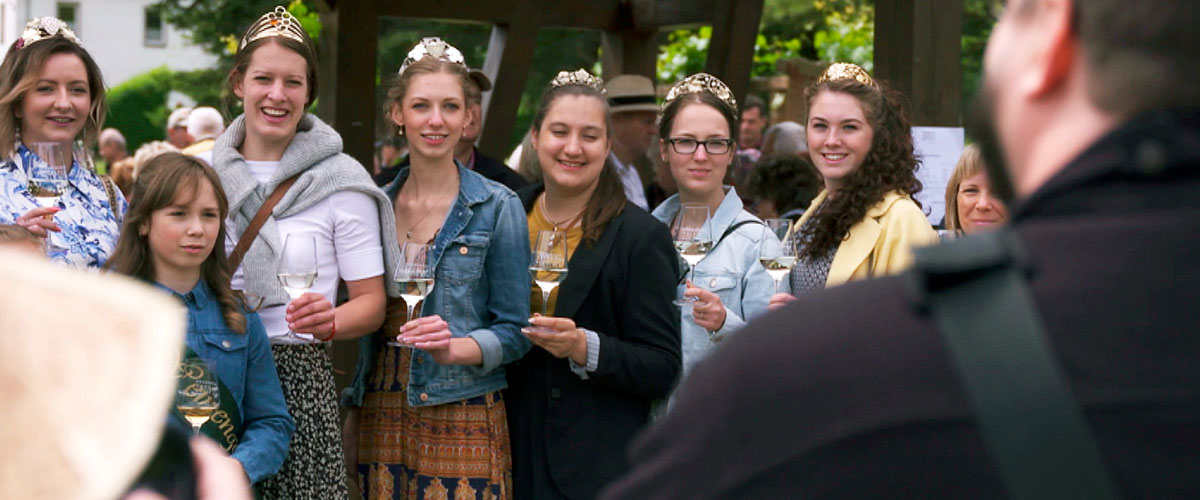
Bad Sulza has two of its treasures already in its name: The bath for the spa town and the Sulza for salt, that mineral treasure that once brought prosperity to the town. The third treasure grows on the slopes of Bad Sulza, the wine. It has been cultivated here for centuries. Many of the small, private vineyards are gradually being revived by a young generation of winemakers. The film tells the great story of Bad Sulza, linking it to the current commitment of the citizens of Sulza.
 |
SWR Television, 6:08 PM
Horrweiler is located not far from Bingen. About 800 people live in the village. The Backhausstraße is central and can be considered the cultural mile of the village, as there is an ambitious local museum, a jazz stage, and a branch of the VHS Bingen. But you can also find a traditional local pub and a “future winemaker” here. And, not least, a scientist who researches sustainability.
hr television, 12:55 PM
After many years abroad and a failed marriage, Thomas Stickler (Harald Krassnitzer), the son of a Rust winemaker, returns to his Austrian homeland and takes over the family business after his father's death. Not to the delight of all involved, as Thomas has been away too long to be accepted as belonging again. In the large winemaker and mayor Georg Plattner (Stefan Fleming), who is married to Thomas' sister Andrea (Katharina Stemberger), he finds his greatest opponent. For Georg had also counted on the inheritance. But Thomas is determined to start a new life as a winemaker. By his side is not only his teenage daughter Anna (Britta Hammelstein), who decides to live with her father, but also his mother Hermine (Christine Ostermayer), cellar master Claudia (Susanne Michel), and large winemaker Gottfried Schnell (Wolfgang Hübsch), an old family friend.
SWR Television, 8:15 PM
Italian vacation in Germany. Impossible? Not at all: Moderator Anna Lena Dörr searches for and finds Bella Italia on her expedition. How beautiful the north of the Palatinate is, due to its wine landscape with its castle villages and cypress avenues, it resembles Tuscany. Dolce Vita seems to be the local culture of life in the north of the Palatinate: Pasta, Vino, Amore.
3sat, 9:15 AM
In northern Argentina, an adventurous bus tour leads to the mountain village of Tilcara. The moderator Andrea Jansen sets off on the long journey to Colomé, a winery far from paved roads or large cities. The trip becomes a road trip in spectacular landscapes, and the winery turns out to be an oasis of wine amidst high mountains.
WDR Television, 11:05 AM
The grape harvest in Rheinhessen is just around the corner. Now it is important to find the perfect time so that the grapes have enough sugar and aroma but do not rot on the vine. Winemaker Shanna Reis regularly checks her vineyards and sends samples to the lab. Every day could be the day the harvest begins, and there is still so much to prepare.
ZDF, 3:45 PM
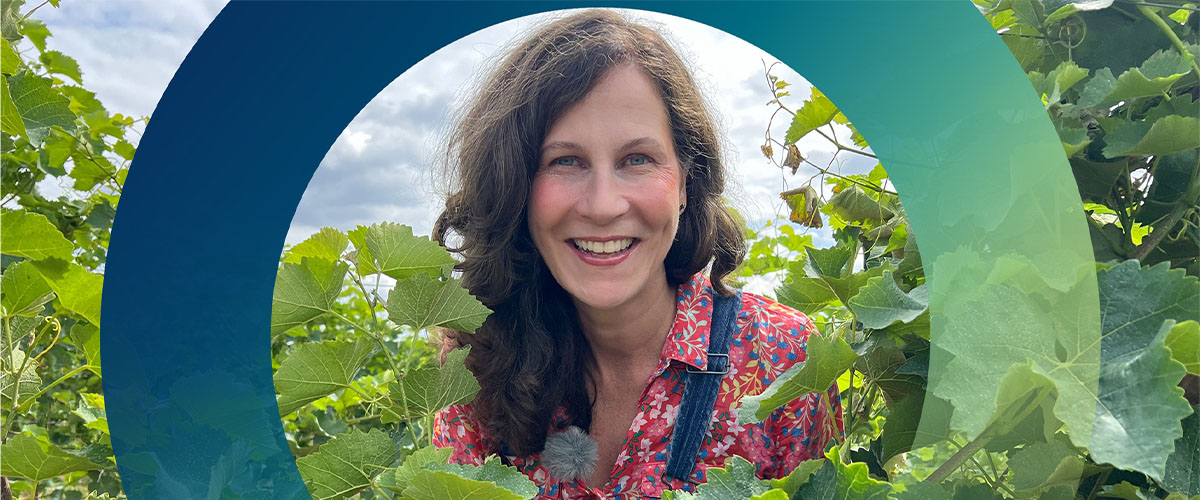
Climate change challenges winemakers. They need to rethink. Which grapes will end up in our wine glasses in the future? Gardening expert and journalist Sabine Platz wants to know: How are winemakers adapting? To do this, she visits organic wineries, deals with the shift of growing areas northward, and the future of Riesling. At the Geisenheim Wine School, she is shown a unique research project. It is about how increased carbon dioxide concentrations in the atmosphere will affect the grapevines in the future.
 |
MDR Television, 12:30 PM
A series of strokes of fate must Anne Wader (Henriette Richter-Röhl) endure as the junior manager at the “Winery Wader”: First, she loses her beloved father, then there is a dispute over the inheritance, and finally, the traditional family business is on the brink of collapse. Alone, she fights against the selfish interests of her relatives, played by Leslie Malton and Max von Pufendorf, and the takeover by her father's arch-enemy. A glimmer of hope in the intrigue is a childhood crush, played by Sebastian Fräsdorf, who returns to his homeland after many years abroad. The German Wine Route with the Hambach Castle as a landmark offers a great backdrop for the family story.
3sat, 12:50 PM
The film takes you on a journey from the “primeval sea” of the past to the wine and cultural landscape of today's South Styria. This unique cultural landscape is characterized by small-structured locations with steep vineyards, hills, and valleys with orchards and flower meadows, with chestnut and beech mixed forests, with hop fields, and a diverse river, floodplain, and moor landscape.
hr television, 12:55 PM
At the opening of the will, the Stickler family is in for a surprise: Contrary to all expectations, Edi has not bequeathed his wineries to his daughter Andrea, but to his son Thomas. Andrea feels overlooked, even though her father financed her own pharmacy years ago: For she accuses her brother, who has lived abroad for years, of never being there for the family. Since Georg is also dependent on the quantity of grapes, he pressures his brother-in-law to extend the original lease agreement. Thomas must decide whether to accept his father's inheritance or relinquish the land to Georg. Meanwhile, Anna, Thomas' daughter, discovers her mother's relationship with Thorsten Schmidt and is informed about her parents' impending separation. She breaks off with her mother, does not go on the planned vacation to England, but travels to her father in Rust.
WDR Television, 2:30 PM
The two top chefs Björn Freitag and Frank Buchholz travel the Moselle by houseboat. Surrounded by this unique river landscape and vineyards, they discover the culinary specialties of the region and cook refined down-to-earth summer dishes from them. For the relaxed dinner on deck, they also invite the producers they visited during the day. For example, the small vinegar factory of Herbert Budweg in Ediger-Eller. Herbert is a trained cook and took over 4,500 bottles of old Moselle wine when he bought an old winemaker's house. From this aged wine, he creates his vinegar creations. Together, Herbert and Björn produce a vintage vinegar with wine from Björn's birth year and taste various stages of vinegar fermentation.
3sat, 4:05 PM
The series “Dream Places” leads to the most beautiful places in the world. In this episode, it goes to the Loire Valley. It is known for its fairy-tale castles and excellent wines.
3sat, 4:45 PM
With 300 sunny days a year, Provence is one of the most popular vacation destinations in Europe. The Mediterranean region between the Rhône Valley and Italy is the epitome of southern lifestyle. From Avignon, it is just a stone's throw to the famous wine-growing region Châteauneuf-du-Pape in the southern Rhône Valley.
hr television, 10:15 AM
The Lavaux wine region between Lausanne and Vevey is considered one of the most beautiful landscapes in Switzerland. The mighty rock walls of the Savoy and Vaud Alps protect against cold winds, and the more than three hundred meter deep Lac Léman - Lake Geneva - ensures a mild climate. Even the Romans planted vines on the steep banks. In the Middle Ages, Cistercian monks began to create terraced vineyards with masonry, thereby increasing the quality and yield of the vines. Despite the use of modern techniques, viticulture in Lavaux is still extremely labor-intensive due to the steep locations. To facilitate cultivation, dizzying monorails have been built to transport people and materials to the upper terraces. The steepest slopes are those of Dézaley, shaped by the Rhône glacier. The clay and limestone-rich soil gives the wines - especially the Chasselas, the Gutedel, its typical taste. Lavaux - mountains, lake, vineyards, and settlements form a unique cultural landscape. For this reason, it was added to the UNESCO World Heritage List in 2007.
WDR Television, 8:15 PM
Daniel Aßmann can always marvel at his home region. So also in Herdecke, where wine has recently been cultivated at Hengsteysee. The Koepchenwerk is an old power plant that still generated electricity until 1994. On the slope above the facility, a group of winemakers is now allowed to realize their dream: In 2026, they want to harvest their first crop.
3sat, 11:45 AM
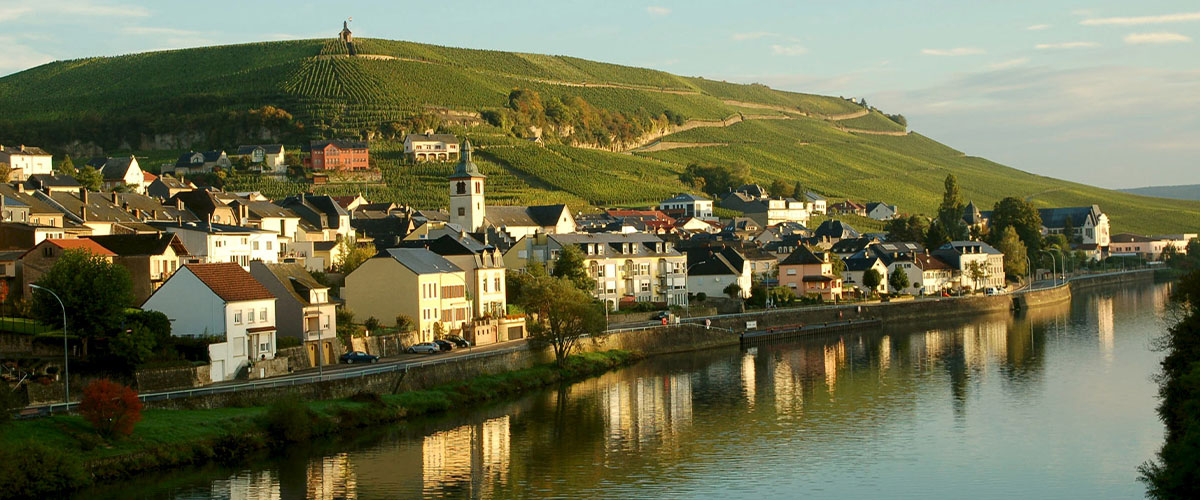
If Europe should have a soul, then it might hover over the wine slopes along the Luxembourg Moselle. There, old Europe comes together, France, Germany, Benelux. In Luxembourg, at some point, they stopped deciding between the Germanic and the Romanesque. In Luxembourg, both come together, and the Luxembourgers are proud of it. You can not only hear it in the language, but you can also taste it: The Luxembourg Crémant is made from the ancient German grape variety Riesling and refined into Crémant in the French champagne style. The “Wainzossis”, the sausages, are refined with wine. The villages along the Moselle are close-knit, house stands next to house, winemaker lives next to winemaker. In Wormeldingen, the Schumachers have their winery. Until recently, Erny and his son Tom were still pressing in the garage. Now they are building a new, large wine cellar down by the Moselle. It is not finished yet. Between the brand-new pressing facilities, painters and tilers are still working. Erny and Tom hope that everything will work out in time for the grape harvest.
 |
3sat, 10:20 AM
Untouched wilderness can still be found in Switzerland. In the twenty unique nature parks. Three moderators from different language regions of Switzerland take a closer look at these parks. Olivia Röllin visits the first Swiss wine technologist Felizitas Mathier at her winery, which she runs together with her husband in the third generation. Unlike most vineyards in Valais, whose soils are kept bare and free of any vegetation, pure life thrives on the couple's parcels. Plants of all colors and shapes thrive, bumblebees buzz, and ladybugs crawl – and this has been the case for decades. Olivia Röllin learns about the advantages of this type of cultivation and how this is slowly becoming known among neighbors.
MDR Television, 12:30 PM
Henriette Richter-Röhl alias Anne Wader makes a fresh start as a manager at the neighboring winery Roscher. However, she cannot simply leave the “Winery Wader” behind: When the Palatinate organic winemaker learns of difficulties in the family business, she immediately rushes to help. The heavy suspicion that the traditional winery is being deliberately driven to ruin falls on her successor and even on relatives. Moreover, the decades-long conflict between the two Wader patriarchs weighs like a curse on the family clan. When Anne uncovers a secret of her deceased father, her uncle Bruno's family falls apart. The boundless anger of her cousin, played by Kyra Sophia Kahre, also has serious consequences for Anne. In the second film of the family saga, the new life that the organic winemaker is just building threatens to collapse again.
ARD-alpha, 5:30 PM
Where the Main winds through gently rolling landscapes, where Franconian wine is cultivated and hearty food is served, SWR moderator Annette Krause sets off on a discovery tour for the travel report “Expedition into the Homeland”. She begins her journey at the Bronnbach Monastery near Wertheim in northern Baden-Württemberg. From there, she travels through Giebelstadt, Sommerhausen, and Randersacker to the residence city of Würzburg. In conversations with winemakers, star chefs, artists, and castle owners, she explores what makes the region special.
Bavarian Television, 11:30 PM
Georgia is considered the cradle of viticulture. Over 500 native grape varieties are recorded. Many winemakers search for lost grape varieties in their vineyards or in the wild and breed them back.
3sat, 2:45 PM
In northern France, you will find wild romantic coastal areas, some of the most famous wine-growing regions on earth, castles and cathedrals, and one of the most beautiful cities in the world: Paris. Whether Chablis, Burgundy, or Champagne – many of northern France's landscapes are inextricably linked to viticulture, and their names evoke associations of luxury and enjoyment. Among the oldest wine sites in France is Clos de Vougeot, established by Cistercian monks at the beginning of the 12th century.
3sat, 3:30 PM
Southern France combines the beauty of nature and culture. From the castles of the Pyrenees, the journey leads over the Central Massif to Provence and the Côte d'Azur. The wineries around Bordeaux and the pilgrimage site of Lourdes also attract visitors from all over the world.
arte, 1:25 PM
For centuries, wine was cultivated in Paris. In the Middle Ages, monks cultivated the vines that the Romans had once planted in Montmartre and Saint-Denis. Wine cultivation contributed to the wealth of the royal house. After the French Revolution, the Parisian vines gave way to large storage halls, and Bercy became the largest wine cellar in the world. For the people, there were now affordable drops from all over the world. In the 20th century, the vines of Montmartre experienced a rebirth. Today, they testify to the eventful history of viticulture in the French capital.
hr television, 1:00 PM
Thomas plans a fundamental renovation of the entire winery and takes out a loan for modernization. Claudia Plattner, his former lover and cellar master, supports him and introduces him to the secrets of winemaking. Thomas' daughter Anna wants to stay with her father in Rust. Sister Andrea and her husband Georg try to get the inheritance with a forged will.
3sat, 1:15 PM
The Alpe-Adria region is unique in Europe; nowhere else is there such diversity in such a small space, both in terms of landscape and culture. In San Daniele, near the castles of Villalta and Ragogna, the filmmakers visit a traditional prosciutto factory, in the gentle hilly region of Gorizia, the winery of the Perusini family.
3sat, 9:45 PM
Wine culture, hiking trails, an exciting history, and a vibrant everyday culture: The Seven Mountains have a lot to offer. - The film leads from the Drachenfels to the Mannberg. The members of the Belz family have been cultivating their wine as eco-winemakers since the 1990s on the steep slope at Mannberg near Unkel on the Rhine.
hr television, 12:55 PM
The renovation work at the winery begins: The groundbreaking ceremony for the construction of a new, modern cellar takes place. Brother-in-law Georg is not yet willing to give up and spins new intrigues against Thomas. While Thomas' daughter Anna and Paul, Claudia's son, are just falling in love, Claudia has to worry about her ever-improving connection to Thomas, as Thomas and the notary Dr. Petra Thaler are slowly getting closer.
3sat, 1:20 PM
During the journey along the Adriatic coast, you will learn more about the history of Croatia and meet exciting characters: from an employee of a seawater saline to a winemaker from the island of Hvar to teachers at the stone masonry school in Pučišća.
arte, 4:00 AM
The largest department in France is characterized by both noble wines and oyster farming as well as a diverse nature with great biodiversity. The name Gironde refers to the region and its namesake: a mighty river that shapes the entire area. At its center lies Bordeaux, the metropolis of the world-famous wine region.
3sat, 11:05 AM
The residents of the province of Catania in eastern Sicily cultivate excellent wine. The slopes of Etna are among the most fertile in all of Italy due to the ongoing ash rain.
3sat, 1:20 PM
The Patrimonio region in northern Corsica is known for producing some of the best wines in Corsica. In the north of the island is also the wine-growing area of Calvi. Almost half of the wines produced in Corsica are rosé wines and are produced in this region.
3sat, 5:00 PM
There are about 17,000 olive trees on the island of Monte Isola, the northernmost in all of Italy. This is due to the particularly mild microclimate of Lake Iseo at the foothills of the Alps. It also favors wine cultivation on the southern shore. The Franciacorta sparkling wine, created here in the 1960s, is now in high demand worldwide.
3sat, 1:05 PM
Porto is famous for port wine, but also for its nostalgic trams. The route leads along the Douro River right into the UNESCO-acclaimed wine-growing region – only there may the grapes for the popular port wine grow.