The current vintages, and especially 2018, are a good example of how German winegrowers are now coping with hot and dry years. Especially when it comes to Riesling, many wine lovers are afraid that climate change could slowly spoil the fun of their favourite variety. Regardless of the quality of many of its wines, the 2003 vintage in particular, because of its high alcohol content, low acidity and very distinctive aroma, stands for the misfortune that will inevitably befall us with each new hot vintage.
In practice, however, things look quite different. Of course, there are also ponderous, alcohol-rich and finesse-free wines in 2018, bitter tones caused by sunburn and one or two other shifts in aroma. As was the case last year, the qualities also fluctuate greatly, even among individual producers. In general, however, the vintage is much better than many initially feared. The atypical age notes (UTA), which were reflexively diagnosed early on as a typical consequence of drought stress, are very limited on closer inspection, the acids are generally healthy and the alcohol levels are completely inconspicuous, especially among the good producers. Some winemakers even speak of the best wines of their lives.
Nevertheless, we are rather cautious with such assessments. Especially the top Rieslings of the vintage often have their very own, conspicuous phenolic, which we hardly know from other years. We wouldn't be surprised if some of the wines did even better than today when they were sufficiently mature in the bottle, but some of them were often impressive even after days in the air, but at the same time still so walled in that we had no choice but to remain cautious in our assessment. So we are more curious than ever to see how the best wines of the vintage will develop.
But, as always, it is worthwhile to pay attention to more than just the vintage peaks. 2018, too, offers a wealth of highly recommendable, and contrary to all fears, often stimulatingly fine-fruited, elegant, lively wines, and often at very consumer-friendly prices. These are inevitably not listed in our BEST OF, which is about the highest-rated wines of the tasting season, In Focus, but are nevertheless worth every attention. We therefore strongly recommend looking at all the tasting results. We tasted more than 1200 dry Rieslings last year. As always, you can find the best ones here and as PDF.
Vintage 2018
- 98WP Ölberg "Chapel" GG, Christmann
- 97WP Hell's Path in the Mühlenberg GG, Dönnhoff
- 97WP Kreuzberg "Auction", Battenfeld-Spanier
- 97WP Rothenberg GG "Wurzelecht", Kühling-Gillot
- 96WP Pettenthal GG, Keller
- 96WP Hermannshöhle GG, Dönnhoff
- 96WP Mandelgarten-Meerspinne GG, A. Christmann
- 96WP Schlossberg, Breuer
- 95WP Reiterpfad-Hofstück GG, A. Christmann
- 95WP "G-Max", Keller
- 95WP Saumagen GG, Rings
- 95WP Auf der Ley GG, Emrich-Schönleber
- 95WP Pittermännchen GG, Diel Castle Estate
- 95WP Pettenthal GG, Kühling-Gillot
- 94+WP Idig GG, Christmann
- 94WP Brunnenhäuschen GG "Abts E", Keller
- 94WP Hipping GG, Cellar
- 94WP Hipping GG, Kühling-Gillot
- 94WP Hipping GG, Schätzel
- 94WP Weilberg GG, Rings
- 94WP Kirchenstück GG, Bassermann-Jordan
- 94WP Burgberg GG, Kruger-Rumpf
- 94WP Ölberg GG, Kühling-Gillot
- 94WP Abtsberg GG, Maximin Grünhaus
- 94WP Goldloch GG, Diel Castle Estate
- 94WP Morstein GG, Wittmann
- 94WP Kirchspiel GG, Wittmann
- 94WP Nonnenberg, Breuer
- 94WP Dellchen GG, Dönnhoff
- 94WP Felsenberg GG, Dönnhoff
- 93WP Felseneck GG, Schäfer-Fröhlich
- 93WP Pettenthal GG, St. Antony
- 93WP Pettenthal GG, Schätzel
- 93WP Gräfenberg GG, Weil
- 93WP Pechstein GG, Bassermann-Jordan
- 93WP Steinberg GG, Gut Hermannsberg
- 93WP Ölberg, A. Christmann
- 93WP Goldtröpfchen GG, Lieser Castle
- 93WP Freundstück GG, Bassermann-Jordan
- 93WP Brunnenhäuschen GG, Wittmann
- 93WP Treppchen GG "Old Vines", Dr. Loosen
- 93WP Steinacker, Knewitz
- 93WP Zellerweg am Schwarzen Herrgott GG, Battenfeld-Spanier
- 93WP Rothenberg GG, Gunderloch
- 93WP Uhlen GG, Knebel
- 93WP Hell, Diel Estate
- 93WP Scharlachberg GG, Kruger-Rumpf
- 93WP Aulerde GG, Wittmann
- 93WP Roseneck GG, Allendorf
- 93WP Sundial GG, Lieser Castle
- 93WP Morstein GG, Keller
- 93WP Jesuitengarten GG, Bassermann-Jordan
- 93WP Ungeheuer GG, Bassermann-Jordan
Vintage 2017
- 97WP Burgberg GG, Diel Estate
- 97WP "300", Bassermann-Jordan
- 94WP Uhlen GG "R", Heymann-Löwenstein
- 94WP Hermannsberg GG, Hermannsberg Estate
- 94WP St. Nikolaus GG, Peter Jakob Kühn
- 93WP Doosberg GG, Peter Jakob Kühn
- 94WP Pechstein GG, von Winning
- 93WP Gaisböhl GG, Dr. Bürklin-Wolf
- 93WP Greiffenberg GG, Schloss Vollrads
- 93WP Marienburg GG "Rock Terrace", Busch
- 93WP Langenmorgen GG, Dr. Bürklin-Wolf
Older vintages
- 99WP 2013 "60", Ress
- 97WP 2005 Hell Gold Capsule, Artist
- 94WP 2009 Ölberg GG, Kühling-Gillot
- 94WP 2016 Reiterpfad GG "In der Hohl", Dr. Bürklin-Wolf
- 94WP 2015 Rothenberg "Virgo", Gunderloch
- 94WP 2011 Burgberg GG, Diel Castle Estate
- 94WP 2007 Im Sonnenschein "Ganshorn", Ökonomierat Rebholz
- 93WP 2010 Felsenberg GG, Dönnhoff
- 93WP 2015 Rothenberg GG, Gunderloch
- 93WP 2011 Nußbrunnen EG, Ress
- 93WP 2009 Kastanienbusch GG, Ökonomierat Rebholz
- 93WP 2016 Johannisberg GG, Prinz Salm
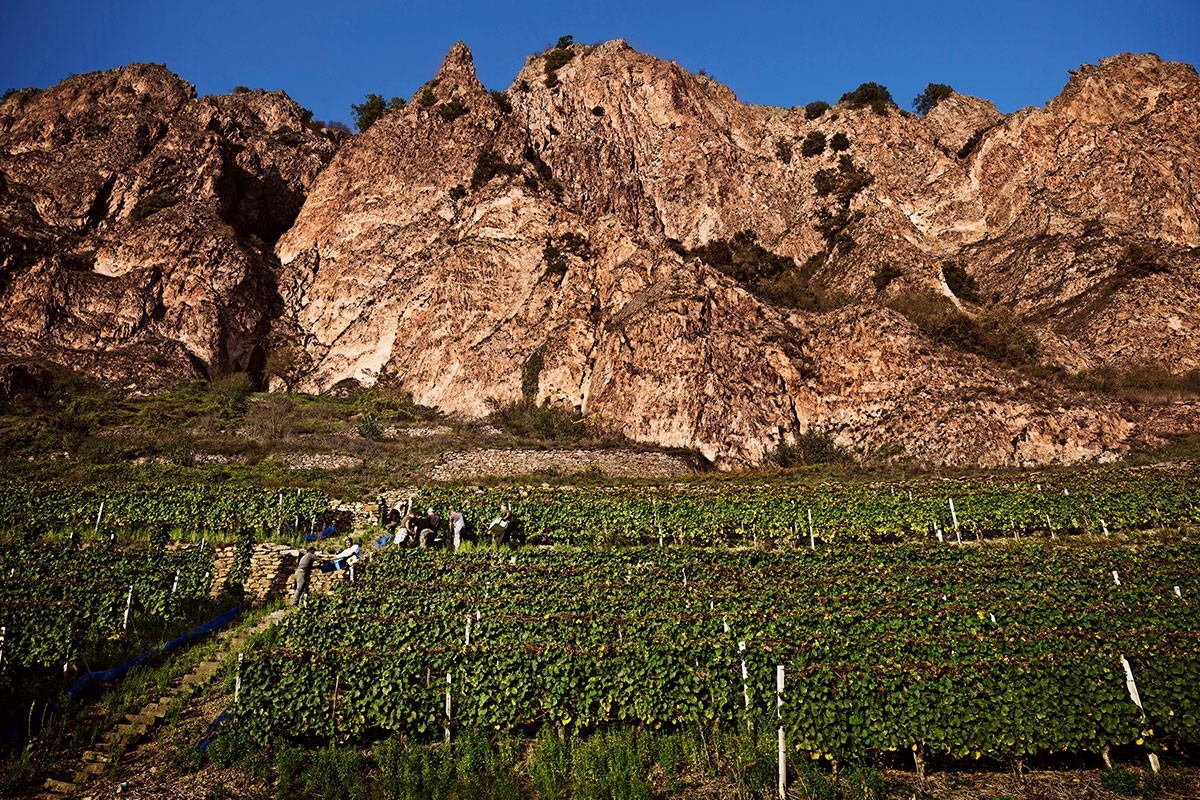
Cover picture: Traiser Bastei, Nahe